
01-11-18
‘Screenagers’
How does the digital age shape your life?
“We live in a society exquisitely dependent on science and technology, in which hardly anyone knows anything about science and technology.” – Carl Sagan
When I first read about the award-winning documentary film “Screenagers: Growing Up in the Digital Age,” my first response was – what a great new word to describe teenagers because everyone knows that teenagers are obsessed with their digital devices 24/7.
The film, produced last year, won Special Recognition at the 2016 Stony Brook Film Festival.
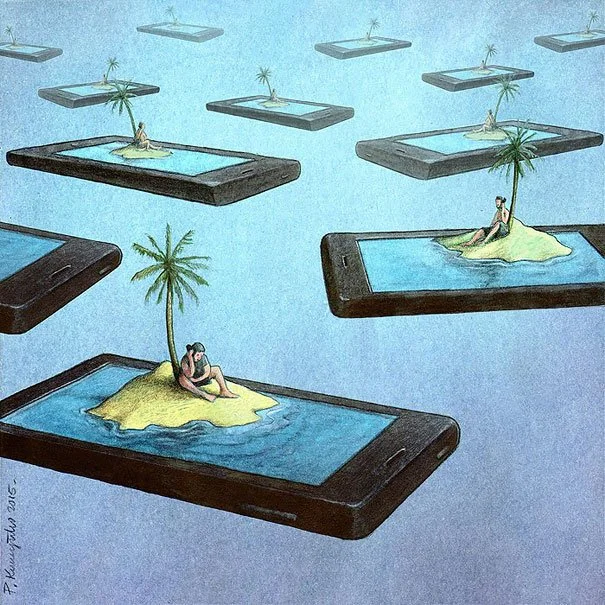
But when I watched the film last month, shown at First Church of Nashua, I realized that the term refers to all of us – not just the younger generation. Still, the younger generation is obsessed with the digital age in ways we cannot yet fully grasp, largely because most school-age children have not known a life without cell phones, tablets and computers – so awareness is imbedded beneath the surface of the conscious mind.
According to a recent report by Common Sense Media, teens spend about nine hours a day online. The film opens with the statistics that teens spend an average of five to six hours a day looking at screens, not including homework.
The film came about when award-winning documentary film director Delaney Ruston, a primary care physician, began to wrestle with digital-age questions when her daughter turned 13 and wanted a smart phone.
According to the CNN “Being 13” study, the teen-screen obsession is due to the needs and desires of teenagers to “monitor their own popularity status, and defend themselves against those who challenge it on social media” – a reality that often leads to constant vigilance that only exacerbates stress and anxiety. On the plus side, digital devices provide convenience for teens in communication about school, social events and interaction with peers.
So what’s a parent to do?
The film highlights that the first step to a more balanced approach to screen time – awakening awareness of habits that are so unconscious, they can seem invisible.
The film portrays different screen-time issues through family stories. One teen’s grades plummet because of her constant use of her school-issued Chromebook. Another girl took a selfie in her bra and texted it to someone who passed it around school. Many teens share their concerns about their own screen “addictions.”
In one such story, a straight-A student admits flunking out of college due to a video game addiction – and then saves himself by seeking treatment at a Restart Life Program in Fall City, Washington, a camp developed to help those with screen addictions.
These stories are interspersed with a fascinating array of research studies about how screen interaction changes your brain; the violent nature of video games; and the long-range impact of social media.
One set of experiments found that baby mice exposed to screen time developed fewer brain cells in the areas of learning and memory than non-exposed mice. Could this prove true for humans as well?
The root of violence in video games stems from the fact that they were originally developed by the military to desensitize troops to the experience of shooting people – hardly a desirable model for young minds. A better alternative might be some popular non-violent video games that emulate kindness and helping others.
Some psychologists question whether teenagers’ obsession with texting and social media becomes a crutch to avoid face-to-face interaction that teaches social awareness, empathy and understanding between peers.
Research about multi-tasking and the human brain was also revealing. A study by Common Sense Media reported that nearly two out of three teens do not think watching television, texting or using social media while doing homework impacts them.
But research shows that when people “task-shift” or take on multiple tasks simultaneously, they are less effective than when they do one task at a time. Findings indicate that doing two mental activities at once diminishes the brain’s ability to focus – thus the popular idea that multi-tasking boosts performance is a myth.
The film recommends advice and solutions for parents:
■ Develop a positive, constructive conversation with the teen devoid of emotion and anxiety.
■ Collaborate on, rather than dictate, a family policy about screen use.
■ Be consistent in enforcing family rules.
■ Encourage ongoing conversations about technology.
One family instituted “Tech Tuesdays,” a weekly meeting time for a regular discussion about digital device use.
The film then turns an about face and drastically changes the focus by asking students about their observation of the screen habits of their parents. In many cases, parents were so obsessed with monitoring the digital attachments of their teenagers, they fail to examine their own screen habits. They soon realize they cannot ask their teen to be objective when they as parents do not do the same self-analysis.
The film concludes that successful monitoring of digital device use depends on awakening awareness, honest self-evaluation, open communication, promoting self-control and balance and keeping social media under control.
What about habits outside the home? What about screen use and driving?
In 2013, 10 percent of all drivers ages 15-19 involved in fatal crashes were reported as distracted at the time of the crash.
Research shows that cell phone use behind the wheel reduces the amount of brain activity associated with driving by 37 percent. In fact, crash risk is four times higher when a driver uses a cell phone – whether or not it’s hands-free. Analysis of video footage of 1,691 moderate-to-severe crashes revealed the fact that distraction was a key factor in 58 percent of crashes involving drivers ages 16-19. Furthermore, distractibility is not exclusive to teen drivers.
How does screen use effect sleep?
According to Harvard professor Charles Czeisler, artificial lights disrupt the natural rhythms of the body, and influence chemicals in the brain, driving sleep-deprived people to simulants like caffeine. While all electric light affects circadian rhythms – the natural body clock – and sleep, exposure to the LED lights of digital devices at night typically prove to be more disruptive than standard electric light bulbs.
Evidently, artificial lights inhibit sleep-promoting neurons in the brain and the nocturnal release of the sleep-inducing hormone melatonin, while it activates neurons that boost alertness.
Consequently, the brain’s “second wind,” stimulated in mid-afternoon to see people through to sunset and electric lighting is now delayed due to technology, so that most people are unaware of time – they are texting, checking emails, doing homework, watching TV as late as midnight – literally in the middle of solar night.
How often do you check your phone? Do you use earbuds? How many hours a day do you spend in screen time? How often do you play video games? How can we judge ourselves?
To help with self-analysis, “Screenagers” raised one universal barometer question: “When you go to sleep at night, where is your cell phone?” If it is in another room, you are less obsessed than the person who has to sleep next to their phone.
I love the advice from Gretchen Rubin: “Turn off your email; turn off your phone; disconnect from the Internet; figure out a way to set limits so you can concentrate when you need to, and disengage when you need to. Technology is a good servant but a bad master.”
D. Quincy Whitney is a career journalist, author, historian and Nashua resident of more than 40 years. You can reach her through the Contact page on this site.