
The University of New Hampshire is celebrating the 150th anniversary of Amy Beach as the first American female composer.
12-14-17
Visibility & Voice
First American female composer Amy Beach
“We cannot live in a world that is not our own, in a world that is interpreted for us by others. An interpreted world is not a home. Part of the terror is to take back our own listening, to use our own voice, to see our own light.”
– Hildegard of Bingen (1098-1179)
Hildegard of Bingen, the first documented female composer, aptly describes the plight of the female and the female composer. Hildegard paved the way for all female composers who would follow her, including New Hampshire-born Amy Beach (1867-1944), the first American female composer and the first American composer to write a symphony – a prolific composer with more than 300 published works to her credit.
Music is one of the most powerful – and invisible – of the arts. It bypasses words, rational thought, and the conscious mind and reaches beneath the surface on its direct line to the brain where synapses create emotion. At the same time, it is invisible because it disappears as fast as it is created. Music dwells in instantaneous bits of memory.
Because it is instantaneous, usage is everything. Historically, what instruments musicians choose to play and the repertoire they choose determines our entire – and only – musical horizon.
Usage creates a “norm” – a kind of landscape of audio expectation shaped solely by who plays what most frequently. A norm, shaped by the stories we tell, morphs into a “truth” – but it is only a partial truth. It is, as Hildegard wrote, an “interpreted” truth, passed along through a society, but it is only a snapshot of the entire truth.
Amy Beach, born in Henniker, was a celebrated composer in her day.
In 1882, when the Boston Handel & Haydn Society premiered her Mass in E Flat, Op. 5, it was the first time the Society had performed a work by a female composer in its 77-year history. In 1883, Beach’s work was performed at the Chicago World’s Columbian Exposition, one of six world fairs at which her works were performed, the last of which was the 1939 New York World’s Fair.
In 1893, the Board of Lady Managers of the Fair commissioned Beach to write a choral work for the dedication of the women’s building. Beach composed Jubilate, Op. 17, for a 300-voice women’s chorus.
Later that year, at the Women’s Musical Congress in Chicago, Beach performed her Romance for Piano and Violin, Op. 23, with Maud Powell, the most celebrated violinist of her time (regardless of gender) – to an audience of 4,000. Proceeds from one of her songs enabled Beach to purchase land for a summer home on Cape Cod. Welcomed as “one of the boys” by a group of nationally-known composers – Edward MacDowell, John Knowles Paine, Arthur Foote, Horatio Parker, and George Chadwick – Amy was invited twice to the White House to perform her work.
Yet, despite that notoriety, Amy Beach is an unsung composer. Musical taste and timing did not work in her favor. When modern composers like Stravinsky and Schoenberg came into favor reflecting the upheaval of WWII, Romantic composers like Beach and her colleagues fell out of favor. But Beach, as a female composer, paid the additional price of being outside the “norm.”
The male-dominated classical music scene, centered in academia, omitted female composers from textbook narratives, arguing that they tended to be associated with smaller, “lesser” works like songs or piano pieces. In reality, the actual problem was that they had no access to orchestral conductors or opera directors who might showcase larger works. Consequently, musicians did not include Beach in their repertoire so her music fell silent. In addition, misogynistic stereotypes held that women did not have the talent or genius for musical composition. As a result, Beach’s Gaelic Symphony was a pioneering work.
Not much has changed in terms of inclusion; the bias against female composers continues. According to musicologist Marian Wilson Kimber, “A century ago in America, you were far more likely to hear a piece by a woman than you are today.”
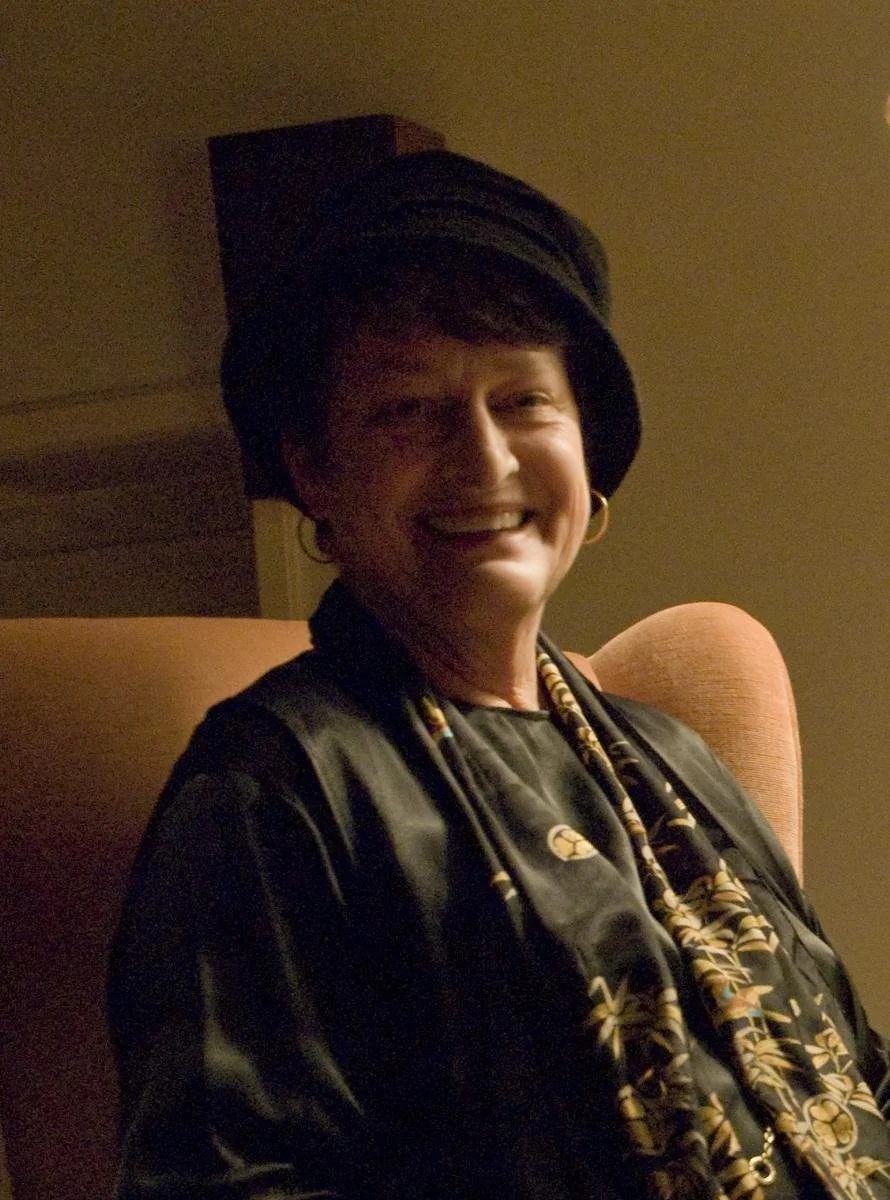
A few years ago, Marie Harris – former New Hampshire State Poet Laureate – became fascinated by the paradox of Amy Beach’s life. She chased down Beach’s music and fell in love with it – songs, piano pieces, sonatas, trios, masses, her best known symphony. Eventually, Harris wrote “Amy Beach in Words and Music,” a first-person poetic narrative performance about Beach that she later performed with North Country Chamber Music Players playing some of Beach’s music interspersed.
Now, to honor Beach’s 150th Anniversary, Harris will bring her one-woman performance to four libraries – and more upon request – in conjunction with a special exhibition “A Brilliant Career: The Musical Career of New Hampshire’s Amy Beach,” at the Milne Special Collections and Archives, at the University of New Hampshire.
Imagine being able to hum 40 tunes played on the piano by your mother at age 1, and composing four complete works at age 4 – without access to a piano.
Such began the life of child prodigy Amy Beach. By age 5, her mother, reluctant to embrace the idea of raising a prodigy, admitted that her daughter possessed perfect pitch and synesthesia.
Music history is filled with instances where erroneous “norms” drastically limited musical horizons. Around 1700, when a gifted harpsichord maker by the name of Bartolomeo Cristofori invented the hammer-action-mechanism of the piano forte, he struggled all his life against a musical “norm” centered on the clavichord and harpsichord.
A century later, three virtuosos brought the piano into the limelight – Beethoven for his dramatic style; Chopin for his quiet innuendo; and Liszt for his Paganini-style showmanship.
Up until the mid-1700s, there were many different-sized violins and stringed instruments. But in 1755, one virtuoso Viennese composer, Joseph Haydn, invented the string quartet, wrote 83 quartets, and took the string world by storm by creating an entirely new “standard” repertoire.
On three different occasions, 20th century violin makers invented new stringed instruments in order to expand the string quartet into an 8-or-10-piece tonally matched string family. All struggled against the reluctance of string players to consider any alternative to the “sacred” string quartet.
Antoine-Joseph “Adolphe” Sax invented the saxophone but struggled all of his life for its acceptance, facing bankruptcy three times defending his patents. When Sax died in 1894, his instrument was still in musical catacombs. Then in 1910, with the dawn of the jazz age, two virtuosos Charlie Parker and John Coltrane took the sax to new heights, and it became a standard.
Despite the passage of a thousand years, the words of Hildegard of Bingen speak to Amy Beach today: “Dare to declare who you are. It is not far from the shores of silence to the boundaries of speech. The path is not long, but it is deep. You must not only walk there, you must be prepared to leap.”
IF YOU GO
Marie Harris in “Amy Beach in Words and Music.”
Durham Public Library; 6:30 p.m. Dec. 18.
Concord Library; March 6, 2018.
Tucker Free Library, Henniker; 2 p.m. March 18, 2018.
Cook Memorial Library, Tamworth; 7 p.m. July 18, 2018.
For further information, interested libraries may contact Marie at marie@marieharris.com Regarding the UNH exhibition, contact Dale Valena Dale.Valena@unh.edu.
D. Quincy Whitney is a career journalist, author, historian and Nashua resident of more than 40 years. You can reach her through the Contact page on this site.